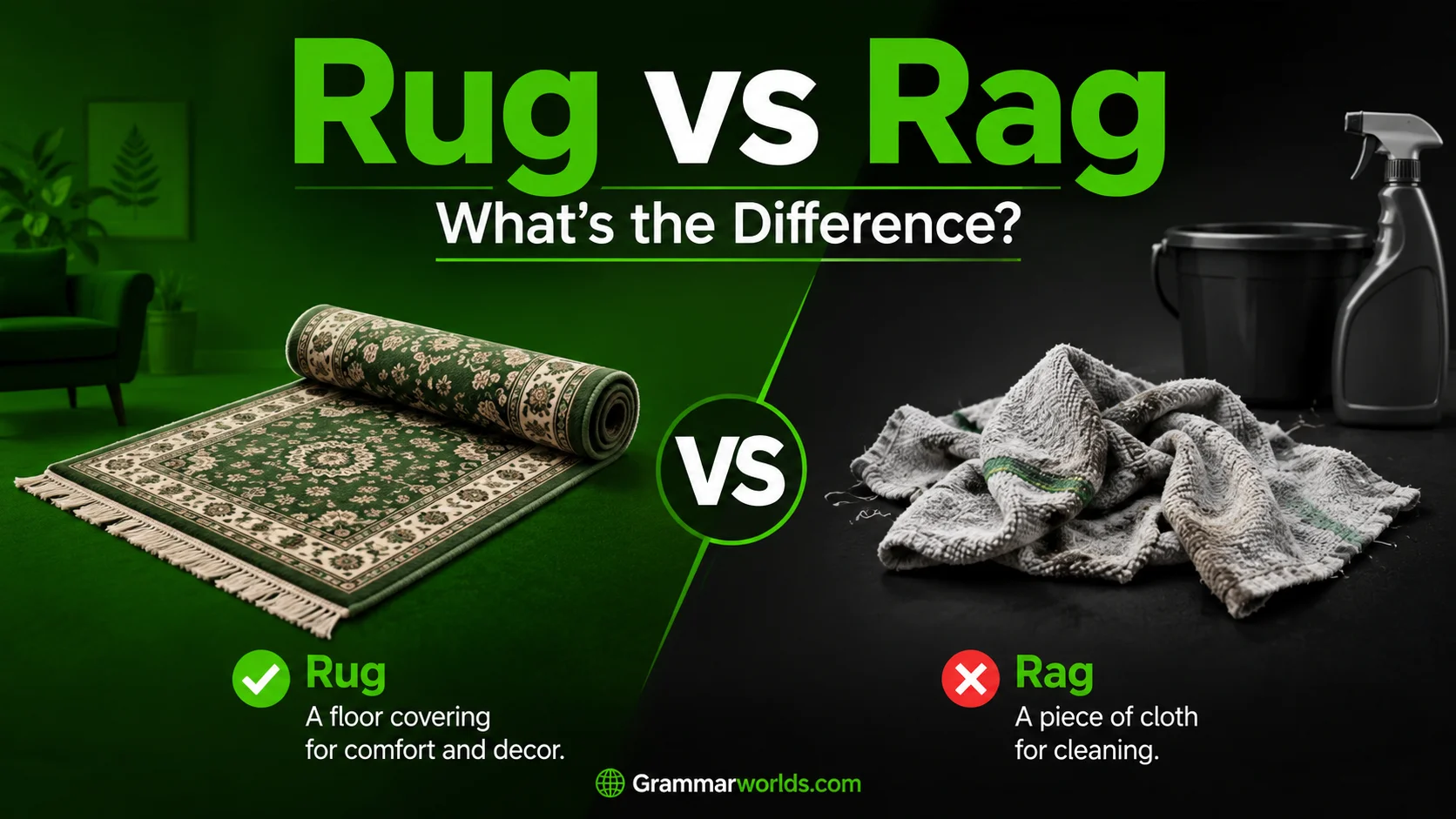
Have you ever looked at the words rug and rag and wondered if they mean the same thing? At first glance, they seem similar because they differ by only one letter. However, these two words describe completely different items with different purposes.
A rug is a decorative or functional floor covering that adds comfort, warmth, and style to a room. A rag, on the other hand, is a piece of old cloth that people typically use for cleaning, wiping, or polishing.
Mixing up these words can make your writing or conversation confusing. Imagine telling someone to “put the rag under the coffee table” when you actually mean a rug. They might picture an old cleaning cloth instead of a beautiful floor covering.
This guide explains Rug vs Rag in simple language. You’ll learn what each word means, how to use them correctly, why people confuse them, and how to remember the difference forever.
Rug vs Rag: The Quick Answer
The easiest way to understand these words is to remember what each one does.
- A rug covers a floor.
- A rag cleans a surface.
Although both are made from fabric, their purpose couldn’t be more different.
| Word | Meaning | Main Purpose |
| Rug | A piece of thick fabric placed on a floor | Decoration, warmth, comfort |
| Rag | A worn-out or cut piece of cloth | Cleaning, wiping, polishing |
Quick example:
✅ She bought a new rug for the living room.
✅ He grabbed a rag to wipe the spilled coffee.
Rug vs Rag Comparison Table
| Feature | Rug | Rag |
| Definition | Floor covering made of fabric or fibers | Old cloth used for cleaning |
| Purpose | Comfort, decoration, protection | Wiping, cleaning, polishing |
| Typical Size | Large | Small |
| Material | Wool, cotton, synthetic fibers, jute, silk | Cotton, microfiber, old T-shirts, towels |
| Where It’s Used | Floors | Hands, furniture, vehicles, workshops |
| Appearance | Decorative | Plain and practical |
| Cost | Usually purchased | Often recycled from old clothing |
| Lifespan | Several years with proper care | Used until worn out |
What Does “Rug” Mean?
A rug is a movable textile floor covering. Unlike wall-to-wall carpeting, a rug can be rolled up, moved, cleaned, or replaced whenever you want.
People use rugs to make rooms more comfortable and attractive. Besides improving appearance, rugs also reduce noise, protect flooring, and provide insulation against cold surfaces.
Common materials include:
- Wool
- Cotton
- Polyester
- Nylon
- Silk
- Jute
- Sisal
- Polypropylene
Each material offers different benefits. Wool rugs feel soft and last for decades. Synthetic rugs resist stains and cost less. Natural fiber rugs create an earthy appearance that fits modern and rustic homes alike.
Common Types of Rugs
- Area rugs
- Accent rugs
- Throw rugs
- Runner rugs
- Bath rugs
- Outdoor rugs
- Shag rugs
- Oriental rugs
- Persian rugs
Each serves a different purpose depending on where you place it.
For example:
- A runner rug works well in hallways.
- A bath rug absorbs water outside a shower.
- An area rug helps define spaces inside an open-concept room.
Why People Use Rugs
A rug isn’t just decoration.
It serves several practical purposes.
Adds Comfort
Hardwood, tile, and concrete floors can feel cold and uncomfortable. Rugs create a softer walking surface.
Protects Flooring
Furniture legs, pet claws, and heavy foot traffic gradually wear down floors.
A quality rug helps reduce scratches and everyday damage.
Improves Safety
Some flooring becomes slippery, especially polished wood or tile.
Non-slip rugs help reduce the risk of falls.
Reduces Noise
Fabric naturally absorbs sound.
Large rugs reduce echoes and make living spaces quieter.
Enhances Interior Design
Interior designers often say a room feels unfinished without a rug.
The right color, pattern, and size can tie furniture together and create visual balance.
“A rug is the foundation of a room’s design. It connects furniture, color, and space into one cohesive look.”
What Does “Rag” Mean?
A rag is a piece of cloth used primarily for cleaning.
Most rags come from old clothing, towels, bedsheets, or fabric scraps that people recycle instead of throwing away.
Unlike rugs, rags have little decorative value.
Their purpose is purely practical.
People use them to:
- Dust furniture
- Wash cars
- Clean windows
- Polish wood
- Wipe spills
- Remove grease
- Apply stain or paint
- Clean machinery
Because they’re inexpensive and reusable, rags remain one of the most useful household cleaning tools.
Common Types of Rags
Not every rag looks the same.
Some are designed for specific jobs.
Cotton Rags
Soft, absorbent, and excellent for everyday cleaning.
Microfiber Rags
These attract dust and trap tiny particles better than traditional cloth.
They’re ideal for:
- Electronics
- Glass
- Mirrors
- Stainless steel
Shop Rags
Mechanics use thick shop rags to remove grease, oil, and automotive fluids.
Disposable Cleaning Rags
Some industries use disposable cloths when hygiene is important.
Examples include hospitals, laboratories, and food preparation areas.
Everyday Uses of a Rag
You’ll probably find at least one rag in almost every home.
People use them for countless tasks.
Examples include:
- Cleaning kitchen counters
- Drying wet shoes
- Washing bicycles
- Dusting bookshelves
- Polishing silver
- Waxing furniture
- Cleaning gardening tools
- Wiping paintbrushes
Because they’re reusable, rags also help reduce household waste.
Instead of using paper towels every day, many families simply wash and reuse cotton rags.
Also Read This : Quantify vs Qualify: Differences, Meanings
Rug vs Rag: The Main Differences
Although both items involve fabric, that’s where the similarities end.
| Aspect | Rug | Rag |
| Primary Function | Covers floors | Cleans surfaces |
| Appearance | Decorative | Functional |
| Thickness | Thick | Thin |
| Value | Often expensive | Usually inexpensive |
| Placement | Floor | In your hand |
| Cleaning Method | Vacuuming or professional washing | Machine washing or hand washing |
| Purpose | Interior décor | Household maintenance |
The biggest difference comes down to purpose.
A rug improves your living space.
A rag helps you clean it.
When Should You Use “Rug”?
Use rug whenever you’re talking about a movable floor covering.
Examples include:
- Living room rugs
- Bedroom rugs
- Hallway runners
- Kitchen rugs
- Bathroom rugs
- Outdoor patio rugs
Correct Examples
- We bought a beautiful rug for our dining room.
- The dog loves sleeping on the rug.
- She vacuumed the rug every weekend.
- The new rug made the room feel warmer.
- Place the rug under the coffee table.
Notice that every example refers to something placed on the floor.
If it isn’t covering part of a floor, it probably isn’t a rug.
When Should You Use “Rag”?
Use rag whenever you’re referring to a cloth used for cleaning or wiping.
Examples include:
- Cleaning rag
- Dust rag
- Shop rag
- Polishing rag
- Paint rag
Correct Examples
- Grab a rag and wipe the counter.
- He cleaned the engine with an old rag.
- She used a microfiber rag on the windows.
- Keep a rag nearby while painting.
- The mechanic reached for a clean rag.
Each sentence describes cleaning rather than decorating.
That’s the easiest clue to remember.
Rug vs Rag in Sentences
Seeing both words side by side makes the distinction even clearer.
Using “Rug”
- The colorful rug brightened the entire room.
- We placed a rug under the dining table.
- That Persian rug has been in the family for generations.
- The puppy curled up on the soft rug.
- They replaced the old rug after renovating the house.
Using “Rag”
- Use a clean rag to dry the dishes.
- He wiped the bicycle chain with a greasy rag.
- The painter carried several cotton rags.
- Keep an old rag in the garage.
- She cleaned the mirror with a microfiber rag.
Notice how every rug sentence relates to flooring, while every rag sentence involves cleaning.
Common Mistakes People Make
Many English learners accidentally confuse these words because they look and sound alike.
Here are the most common mistakes.
Saying “rag” Instead of “rug”
❌ Put the rag under the sofa.
✅ Put the rug under the sofa.
Saying “rug” Instead of “rag”
❌ Use a rug to wipe the table.
✅ Use a rag to wipe the table.
Assuming Both Words Mean Cloth
While both involve fabric, only one belongs on the floor.
The other belongs in your cleaning supplies.
Confusing Spelling
The only spelling difference is the middle vowel.
- Rug → U
- Rag → A
That single letter completely changes the meaning.
Why People Confuse Rug and Rag
Several factors contribute to the confusion:
- The words are only one letter apart.
- Both are short, three-letter nouns.
- Both refer to fabric-based items.
- Their pronunciation is similar for some English learners.
- Fast speech can make the vowel sounds harder to distinguish.
Fortunately, once you connect each word with its purpose, the confusion usually disappears.
FAQs
1: Is a rug the same as a rag?
No. A rug is a floor covering used for comfort, decoration, and protecting floors. A rag is a piece of cloth used for cleaning, wiping, polishing, or drying surfaces. Although both are made from fabric, they have completely different purposes.
2: Can a rag become a rug?
Generally, no. A rag is usually an old or worn piece of cloth that isn’t suitable as a floor covering. While some handmade or braided rugs are created by weaving fabric strips together, those strips are specially prepared. An ordinary cleaning rag isn’t considered a rug.
3: Why do people confuse rug and rag?
People often confuse these words because they differ by only one letter and both refer to fabric items. Their similar pronunciation can also make them difficult for English learners. The easiest way to remember the difference is to focus on their function: a rug goes on the floor, while a rag is used for cleaning.
4: Is a carpet the same as a rug?
Not exactly. A carpet usually covers an entire floor and is often installed permanently. A rug covers only part of the floor and can be moved, rolled up, or replaced whenever needed. In casual conversation, some people use the terms interchangeably, but they aren’t technically the same.
5: What is a rag mainly used for?
A rag is mainly used for cleaning tasks such as wiping spills, dusting furniture, polishing surfaces, washing vehicles, cleaning tools, and applying paint or stain. Many rags are made from recycled clothing or old towels, making them an economical and environmentally friendly cleaning solution.
Conclusion
Understanding the difference between rug vs rag is simple once you know each word’s purpose. A rug is a movable floor covering that adds comfort, warmth, protection, and style Although these words differ by just one letter, using the wrong one can change the meaning of your sentence completely. Saying you “cleaned the table with a rug” or “placed a rag in the living room” will likely confuse your audience.Whenever you’re talking about home décor, interior design, or floor coverings, choose rug. If you’re referring to cleaning, wiping, or polishing, rag is the correct word.Mastering small word pairs like Rug vs Rag helps you communicate more clearly, avoid common English mistakes, and write with greater confidence. Once you remember their distinct roles, you’ll never mix them up again.