English has many words that look and sound almost the same but carry completely different meanings. Tapping and taping are two common examples. A single extra letter changes the entire action being described.
The words sound similar when spoken quickly, but they describe two completely different activities. In the first sentence, someone is lightly touching a surface. In the second sentence, someone is using tape to attach or secure something.
Understanding the tapping vs taping difference and correct usage helps you avoid spelling mistakes, improve your writing, and communicate more clearly. Whether you are writing an email, creating content, studying English, or simply trying to improve your vocabulary, knowing when to use each word makes a noticeable difference.
The easiest way to remember the difference is simple:
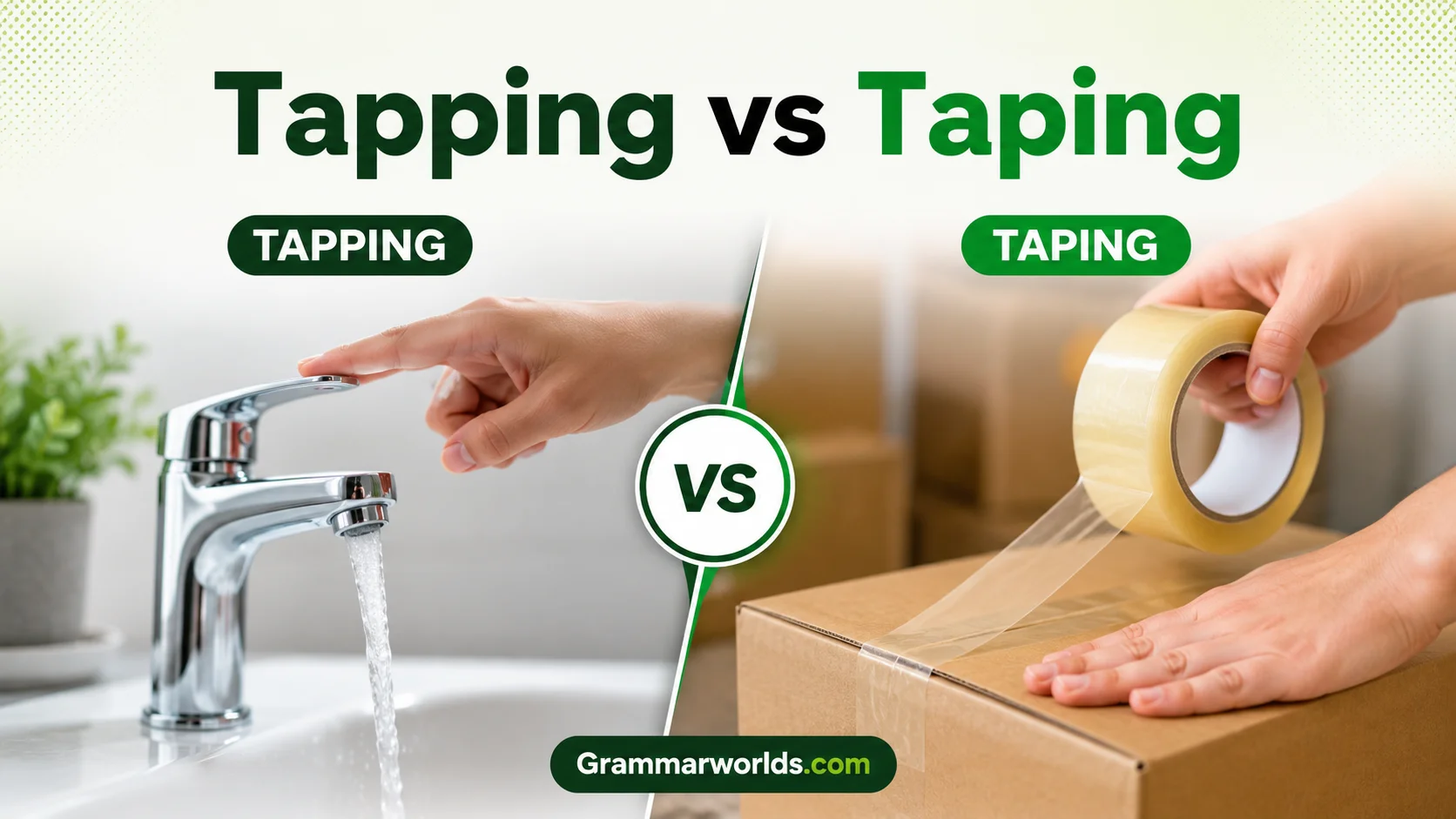
Tapping means touching, knocking, or making a light repeated sound. Taping means using tape or creating a recording.
This guide explains everything you need to know about tapping vs taping, including meanings, grammar rules, pronunciation, examples, common mistakes, and practical usage.
Tapping vs Taping Difference: Quick Comparison
Before exploring each word in detail, here is a simple comparison:
| Word | Comes From | Main Meaning | Example |
| Tapping | Tap | Touching lightly, striking gently, or making repeated sounds | She is tapping her fingers on the desk. |
| Taping | Tape | Attaching something with tape or recording something | He is taping the box for delivery. |
The biggest difference is the action involved.
Tapping involves contact. Your finger, hand, or another object lightly touches something.
Taping involves tape. You use an adhesive strip or recording process.
A quick memory trick:
- Tap + ping = tapping → Think of your finger tapping a screen.
- Tape + ing = taping → Think of a roll of tape.
What Does Tapping Mean?
Tapping is the -ing form of the verb tap. It describes the action of hitting, touching, or striking something gently.
Unlike hitting or banging, tapping usually involves a small amount of force. The movement is often light, controlled, and repeated.
For example:
- “The child was tapping on the window.”
- “She was tapping her foot during the song.”
- “He tapped my shoulder to get my attention.”
The action can happen with your hands, fingers, feet, or even objects.
Tapping Meaning: Light Touching or Hitting
One of the most common uses of tapping is describing a gentle touch.
You often see this meaning in everyday situations.
Examples:
- “I was tapping the phone screen to select an option.”
- “She tapped the door before entering.”
- “The teacher tapped the board with a marker.”
In these examples, the person is not hitting something forcefully. They are making a small, deliberate movement.
Modern technology has made this use extremely common.
People tap:
- Smartphone screens
- Tablet displays
- Computer controls
- Smart devices
- Digital buttons
For example:
“Instead of pressing physical buttons, many people now tap icons on their phones.”
Tapping Meaning: Making Repeated Sounds
Tapping can also describe a repeated noise.
You might hear tapping from:
- Fingers on a table
- Rain against glass
- Shoes on a floor
- Tools hitting a surface
Examples:
- “Rain was tapping against the bedroom window.”
- “His fingers kept tapping during the meeting.”
- “I heard someone tapping at the door.”
This meaning focuses more on the sound created by the movement.
Tapping Meaning: Using or Accessing Something
The word tap also has a figurative meaning.
When someone says they are “tapping into” something, they mean they are using or accessing a resource.
Examples:
- “The company is tapping into new markets.”
- “She tapped into her creativity for the project.”
- “The team tapped into customer feedback.”
Here, nobody is physically touching anything. The phrase describes gaining access to something useful.
Common examples include:
| Phrase | Meaning |
| Tap into resources | Use available resources |
| Tap into knowledge | Access information or experience |
| Tap into talent | Use someone’s skills |
What Does Taping Mean?
Taping is the -ing form of the verb tape.
It means using tape to attach, cover, hold, protect, or secure something. It can also mean recording audio or video.
Examples:
- “She is taping the poster to the wall.”
- “The doctor is taping his injured ankle.”
- “They are taping a television show.”
The meaning depends on the situation.
Taping Meaning: Attaching Something With Tape
The most common meaning of taping involves adhesive tape.
Tape is a thin material with a sticky surface used to connect or hold objects together.
People use tape for many purposes:
- Packaging
- Repairs
- Decorations
- Organization
- Construction
- Medical support
Examples:
- “He is taping the gift box before wrapping it.”
- “She taped the note to the refrigerator.”
- “The worker is taping the edges before painting.”
In each example, tape plays an important role.
Also Read This :Shinny vs Shiny: Which Spelling Is Correct?
Taping Meaning: Supporting or Covering Something
People often use tape to protect or support objects and body parts.
For example:
- Athletes tape their ankles.
- Electricians tape wires.
- Painters tape surfaces before applying paint.
Examples:
- “The basketball player was taping his ankle before the game.”
- “The painter was taping the wall edges to create clean lines.”
Medical taping is especially common in sports.
Athletes may use specialized athletic tape to provide support and reduce unwanted movement.
Taping Meaning: Recording Audio or Video
Another meaning of taping involves recording.
Historically, people recorded sound and video on physical tape. Although many modern recordings use digital technology, the word remains common.
Examples:
- “The studio is taping a new episode today.”
- “The interview was taped yesterday.”
- “They taped the performance for television.”
Today, people often say recording instead of taping, but both words are still understood.
Tapping vs Taping Pronunciation Difference
Although these words look similar, their pronunciation is different.
| Word | Pronunciation | Sound |
| Tapping | TAP-ing | Short “a” sound |
| Taping | TAYP-ing | Long “a” sound |
The easiest way to hear the difference:
- Tap sounds like the word in “tap water.”
- Tape sounds like the word in “paper tape.”
Compare:
- Tap → tapping
- Tape → taping
The silent e in “tape” changes the vowel sound.
Grammar Rule: Why Is It Tapping but Taping?
Many English learners wonder why we write:
- Tap → tapping
- Tape → taping
The answer comes from basic spelling rules.
Why Tap Becomes Tapping
The word tap follows a common English spelling pattern.
When a short one-syllable word ends with:
- One vowel
- One consonant
we usually double the final consonant before adding -ing.
Examples:
| Base Word | Correct Form |
| Tap | Tapping |
| Run | Running |
| Sit | Sitting |
| Stop | Stopping |
So:
Tap + ing = tapping
The extra “p” keeps the short vowel sound.
Why Tape Becomes Taping
The word tape ends with a silent “e.”
When adding -ing, English usually removes the silent “e.”
Examples:
| Base Word | Correct Form |
| Tape | Taping |
| Make | Making |
| Write | Writing |
| Hope | Hoping |
So:
Tape + ing = taping
The silent “e” disappears.
Tapping vs Taping Examples in Everyday Life
Understanding real examples makes the difference much easier.
Technology Examples
Tapping:
- “I was tapping my phone screen to open the website.”
- “She tapped the notification button.”
Taping:
- “The technician was taping the cables together.”
Workplace Examples
Tapping:
- “He was tapping his pen during the meeting.”
- “The employee tapped the keyboard quickly.”
Taping:
- “She was taping documents into a folder.”
- “The worker was taping labels onto boxes.”
Sports Examples
Tapping:
- “The player was tapping the ball before the match.”
- “The dancer was tapping her feet to the music.”
Taping:
- “The trainer was taping the athlete’s knee.”
Entertainment Examples
Tapping:
- “The audience started tapping their feet.”
- “The musician was tapping the drum.”
Taping:
- “The production team was taping a new episode.”
Common Mistakes When Using Tapping and Taping
Many mistakes happen because these words sound alike.
Here are the most common errors.
Using Taping for Touching a Screen
Incorrect:
“I am taping my phone to open the app.”
Correct:
“I am tapping my phone screen to open the app.”
Why?
Because you are touching the screen. You are not applying tape.
Using Tapping When Applying Tape
Incorrect:
“She is tapping the package before mailing it.”
Correct:
“She is taping the package before mailing it.”
Why?
Because the action involves tape.
Confusing Recording With Touching
Incorrect:
“The company is tapping an interview.”
Correct:
“The company is taping an interview.”
Why?
The company is recording the interview.
Tapping vs Taping Related Expressions You Should Know
English uses both words in several common phrases.
Tapping Into
Tapping into means accessing or using something valuable.
Examples:
- “The business is tapping into online customers.”
- “He tapped into his years of experience.”
This phrase often appears in business, education, and personal development.
Taping Up
Taping up means securing something with tape.
Examples:
- “She taped up the package.”
- “He taped up the broken chair temporarily.”
Tap vs Tape as Nouns
The words also work as nouns.
| Word | Meaning | Example |
| Tap | A light hit or a device controlling water flow | Turn off the tap. |
| Tape | Sticky material or recording material | Use tape to fix the paper. |
Easy Ways to Remember the Difference Between Tapping and Taping
Remembering the difference does not need to be difficult.
Try these simple tricks.
Think About the Action
Ask yourself:
Am I touching something lightly?
Use:
✅ Tapping
Example:
- “I am tapping the screen.”
Am I using tape?
Use:
✅ Taping
Example:
- “I am taping the box.”
Look for the Silent E
The letter e gives you a clue.
- Tap → tapping
- Tape → taping
The silent “e” disappears when adding “-ing.”
Real-Life Example: Tapping and Taping in One Situation
Imagine a person preparing a package.
First, they check their phone.
“Maria was tapping her phone to confirm the delivery address.”
Then she prepares the package.
“After checking the information, she was taping the box shut.”
Both words appear in the same situation, but each describes a completely different action.
This is why spelling matters.
A single letter can completely change the meaning of a sentence.
Tapping vs Taping Difference and Correct Usage: Final Comparison Table
| Feature | Tapping | Taping |
| Base verb | Tap | Tape |
| Meaning | Touching, knocking, or making sounds | Using tape or recording |
| Pronunciation | TAP-ing | TAYP-ing |
| Spelling change | Double “p” | Remove silent “e” |
| Common examples | Tapping a screen, tapping fingers | Taping a box, taping an injury |
FAQs
Is tapping the same as taping?
No. Tapping means touching, striking lightly, or making repeated sounds. Taping means using tape to attach something or recording something.
Is “taping” the correct spelling?
Yes. Taping is correct when it comes from the verb tape.
Example:
- “She is taping the package.”
Why does tap become tapping but tape becomes taping?
English spelling rules explain the difference.
Tap doubles the final consonant before adding “-ing.”
Tape removes the silent “e” before adding “-ing.”
How do you use tapping in a sentence?
You use tapping when describing a light touch or repeated movement.
Examples:
- “He was tapping his fingers.”
- “She was tapping the screen.”
How do you use taping in a sentence?
You use taping when someone uses tape or records something.
Examples:
- “He was taping the package.”
- “They were taping the show.”
Conclusion
The tapping vs taping difference and correct usage becomes simple once you focus on the action behind each word.Tapping involves a light touch, a gentle hit, or a repeated sound. You tap a screen, tap a shoulder, or tap your fingers.Taping involves tape or recording. You tape a package, tape an injury, or tape a show.Learning small differences like this helps you write clearer sentences and communicate with confidence. English may have many confusing word pairs, but once you understand the pattern, they become much easier to remember.