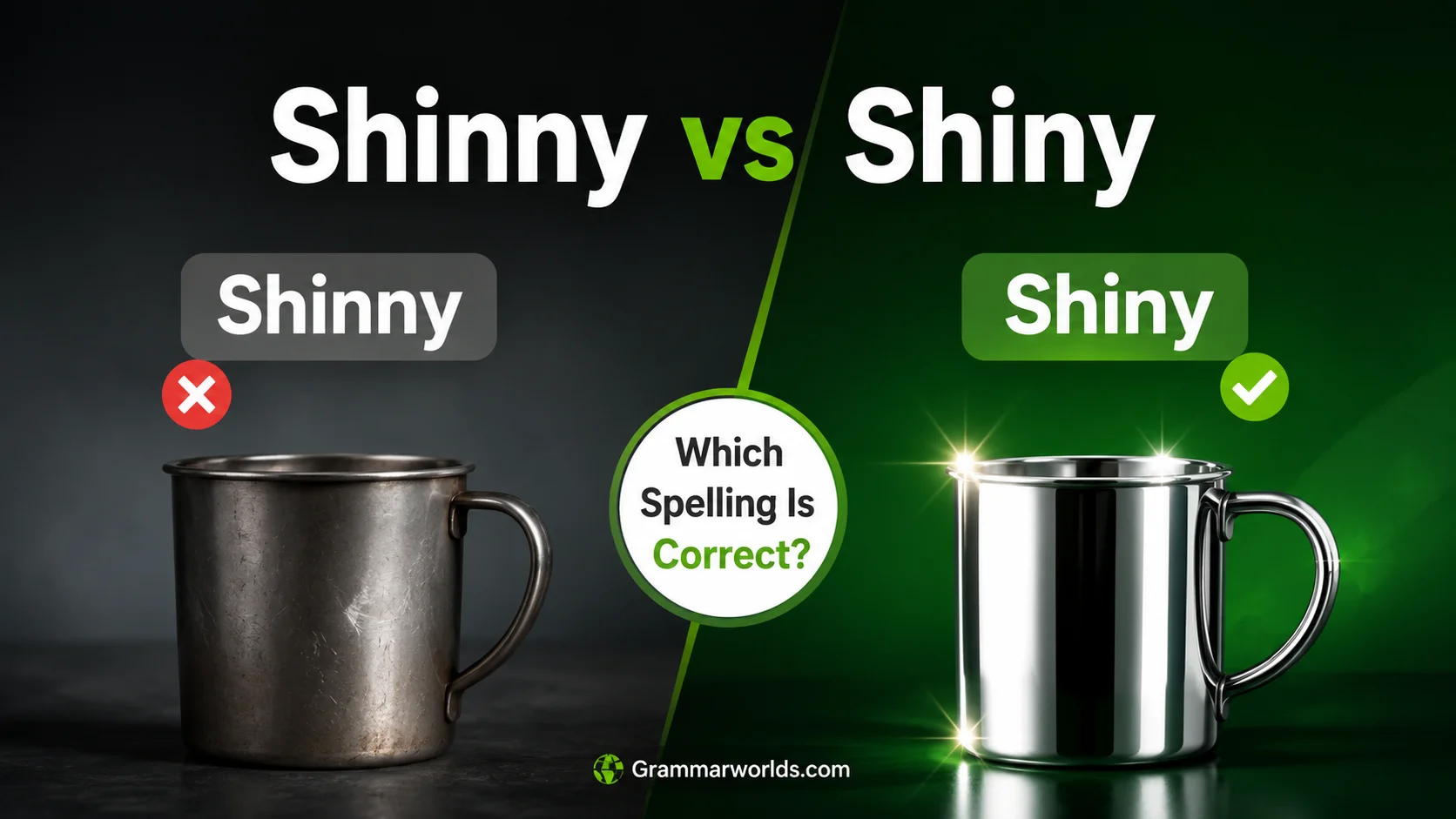
Have you ever typed “shinny” when you meant “shiny”? You’re not alone. These two words look almost identical, sound similar in many accents, and can easily trip up even confident writers.
However, shinny vs shiny is not simply a spelling debate. Both words are real English words, but they describe completely different things.
The word shiny describes something that reflects light, looks polished, or has a bright surface. You might talk about a shiny car, shiny shoes, or a shiny piece of jewelry.
On the other hand, shinny has a completely different meaning. It can refer to an informal type of hockey game, especially one played casually on ice. It can also mean climbing something by using your hands and legs for support.
So, which spelling is correct? The answer depends on what you want to say.
If you are describing something bright or glossy, shiny is the correct word. If you are talking about a casual hockey game or climbing action, shinny is correct.
Let’s break down the difference between shinny vs shiny so you never confuse them again.
Shinny vs Shiny: Quick Difference Explained
The easiest way to understand the difference is to look at their meanings side by side.
| Word | Part of Speech | Meaning | Example |
| Shiny | Adjective | Reflecting light, bright, glossy, or polished | The new phone has a shiny surface. |
| Shinny | Noun or Verb | An informal hockey game or climbing using hands and legs | The children played shinny on the frozen pond. |
The key difference is simple:
- Shiny = something that shines
- Shinny = a sport or climbing movement
A shiny object catches your eye because it reflects light. A person who shinnying up a tree catches your attention because they are climbing in an unusual way.
What Does Shiny Mean?
Shiny is an adjective that describes something with a bright, smooth, or reflective surface. It comes from the verb shine, which means to produce or reflect light.
When something looks polished, new, or glossy, you can describe it as shiny.
For example:
- A freshly washed car looks shiny in the sunlight.
- Her necklace was shiny and sparkling.
- The wooden table became shiny after polishing.
The word does not only describe physical objects. People also use shiny to describe things that appear new, attractive, or impressive.
For example:
He showed off his shiny new laptop.
In this sentence, shiny does not only describe the laptop’s appearance. It also suggests that the laptop is new and exciting.
The Meaning of Shiny in Different Situations
The meaning of shiny can change slightly depending on the context.
Shiny as a Description of Appearance
The most common use of shiny relates to surfaces that reflect light.
Examples include:
- shiny metal
- shiny glass
- shiny jewelry
- shiny floors
- shiny paint
When light hits these surfaces, it bounces back toward your eyes. This reflection creates the appearance we call shine.
For example:
The shiny silver watch reflected the sunlight.
The word shiny helps readers imagine the object’s appearance without needing a long description.
Shiny as a Sign of Something New
People often use shiny to describe new possessions.
Common phrases include:
- shiny new car
- shiny new computer
- shiny new shoes
- shiny new idea
The phrase “shiny new” has become common because people naturally associate new things with freshness and perfection.
For example:
The company introduced a shiny new website design.
The website may not literally reflect light. Instead, shiny creates the idea that it looks modern, attractive, and impressive.
Shiny in Everyday Descriptions
Here are more examples:
| Sentence | Meaning |
| The floor is shiny. | The floor reflects light because it is polished. |
| She has shiny hair. | Her hair looks smooth and healthy. |
| The trophy has a shiny surface. | The trophy has a bright, reflective appearance. |
| He bought a shiny jacket. | The jacket has a glossy material. |
What Does Shinny Mean?
Although many people think shinny is simply a misspelling of shiny, it is actually a real English word.
However, it has nothing to do with brightness or reflection.
Shinny has two main meanings:
- A casual hockey game.
- A climbing action where someone uses their arms and legs to move upward.
Shinny as an Informal Hockey Game
The noun shinny refers to a simple, informal version of hockey.
It is especially associated with Canada, where people traditionally played casual games on frozen ponds during winter.
Unlike professional hockey, shinny usually does not require:
- official teams
- expensive equipment
- formal rules
- organized leagues
It is often a friendly game played for fun.
Example:
The neighborhood kids gathered on the frozen lake to play shinny.
Think of shinny as hockey’s relaxed backyard cousin. It focuses more on enjoyment than competition.
Shinny as a Climbing Action
The verb shinny means to climb something by gripping it with your hands and legs.
People often use this word when describing climbing:
- poles
- ropes
- trees
- pipes
For example:
The child shinnied up the tree to reach the branch.
The movement usually involves wrapping your arms and legs around an object and pushing yourself upward.
This type of climbing is different from normal climbing because the person uses their whole body to move.
Also Read This :Convertor vs Converter: Which Spelling Is Correct?
Why Do People Confuse Shinny and Shiny?
The confusion between shinny vs shiny happens for several reasons.
They Look Almost Identical
The only spelling difference is one extra letter:
- shiny → one n
- shinny → two n’s
That small difference changes the entire meaning.
Many English words have confusing spelling patterns, and this is a perfect example.
They Sound Similar
In many English accents, shiny and shinny sound nearly the same.
When people hear a word instead of seeing it written, they may choose the wrong spelling.
This happens frequently with words that have similar pronunciation but different meanings.
Examples:
- their / there
- to / too
- your / you’re
- shiny / shinny
English spelling does not always perfectly match pronunciation, which creates these common mistakes.
The Double “N” Pattern Can Be Misleading
Many words use double consonants before -y:
- funny
- sunny
- skinny
- tiny
Because of this pattern, writers sometimes assume shinny must be correct when describing something bright.
However, shiny follows a different pattern.
It comes from:
shine → shiny
The spelling connects directly to the original word.
Shiny vs Shinny: The Spelling Rule Explained
Understanding word formation makes this difference much easier to remember.
The word shiny comes from the verb shine.
When English adds -y to describe something connected with a quality, the final e often disappears.
Examples:
| Base Word | New Word |
| shine | shiny |
| noise | noisy |
| grime | grimy |
| ice | icy |
The same pattern appears in many common English words.
That is why shiny has only one “n.”
Common Mistakes With Shinny and Shiny
Many spelling mistakes happen because writers know what they want to say but choose the wrong form.
Here are the most common errors.
Mistake: Using Shinny to Describe Something Bright
Incorrect:
She wore a shinny dress to the party.
Correct:
She wore a shiny dress to the party.
The dress reflects light, so shiny is the correct choice.
Mistake: Thinking Shinny Is Always Wrong
Incorrect idea:
“Shinny is not a real word.”
Correct explanation:
“Shinny is a real word, but it has a different meaning.”
The word is uncommon in everyday conversation, which is why many people assume it is incorrect.
Mistake: Choosing Spelling Based Only on Sound
English contains many words that sound similar but have different meanings.
The correct spelling depends on the definition, not only pronunciation.
Before choosing between shinny and shiny, ask:
Am I describing something that reflects light?
- Yes → Use shiny.
Am I talking about hockey or climbing?
- Yes → Use shinny.
Shinny vs Shiny Examples in Real Sentences
Seeing both words in context makes the difference clearer.
| Sentence | Correct Word | Why |
| The diamond looked bright and reflective. | Shiny | The diamond reflects light. |
| They played a friendly game on the ice. | Shinny | It refers to informal hockey. |
| The polished floor looked beautiful. | Shiny | The surface has a glossy appearance. |
| The boy shinnied up the pole. | Shinny | He climbed using his body. |
| She bought shiny earrings. | Shiny | The earrings have a bright surface. |
| The community enjoyed a game of shinny. | Shinny | It refers to a hockey activity. |
Shiny Synonyms and Similar Words
Sometimes you may want to replace shiny with another word.
Here are useful alternatives:
| Synonym | Meaning | Example |
| Glossy | Smooth and polished | The magazine has a glossy cover. |
| Bright | Full of light | The bright stars filled the sky. |
| Sparkling | Giving off small flashes of light | She wore a sparkling necklace. |
| Gleaming | Shining strongly | The clean car was gleaming. |
| Polished | Made smooth and reflective | The polished table looked elegant. |
| Lustrous | Having a rich, attractive shine | The fabric had a lustrous finish. |
Each word creates a slightly different image.
For example:
- Glossy sounds modern and smooth.
- Sparkling suggests tiny flashes of light.
- Lustrous sounds more elegant and luxurious.
Shinny Related Words and Forms
Because shinny can act as both a noun and a verb, it has several forms.
| Word Form | Meaning | Example |
| Shinny | Hockey game or climbing action | They played shinny. |
| Shinnied | Past tense | He shinnied up the tree. |
| Shinnying | Ongoing action | She is shinnying up the rope. |
Examples:
- Yesterday, they shinnied across the playground equipment.
- The children are shinnying up the climbing structure.
Memory Trick: How to Remember Shinny vs Shiny
A simple memory trick can help you avoid this spelling mistake.
Remember:
If something shines, it is shiny.
The word shiny comes directly from shine, so it keeps the connection.
Another way to remember:
- Shiny has one “n” because it describes light.
- Shinny has two “n’s” because it is a different word.
Think of it this way:
A shiny object shines. A shinny player climbs or plays hockey.
FAQs
Is “shinny” a correct spelling?
Yes. Shinny is a correct English word. However, it does not mean bright or reflective. It refers to an informal hockey game or a climbing movement.
Is shiny spelled with one n or two?
The correct spelling is shiny with one n.
The word comes from shine, which changes to shiny when adding the ending.
Is shinny just a spelling mistake?
Not always.
If someone writes shinny when describing a bright object, it is a spelling mistake. However, shinny itself is a real word with its own meanings.
How do you pronounce shiny and shinny?
In many accents, they sound very similar.
The difference becomes clear through spelling and context rather than pronunciation.
Is “shinny” a misspelling of “shiny”?
Not always. Shinny is a real English word, but it has a different meaning. It refers to an informal hockey game or the act of climbing something by gripping it with your hands and legs.
Conclusion
Understanding the difference between shinny vs shiny becomes easy once you focus on meaning rather than spelling.Use shiny when you want to describe something that looks bright, smooth, polished, or reflective. A diamond, car, floor, or pair of shoes can all be shiny because they reflect light.Use shinny only when you are talking about an informal hockey game or the action of climbing with your arms and legs. Although it is a correct English word, it has nothing to do with brightness or appearance.The quickest way to remember the difference is simple: