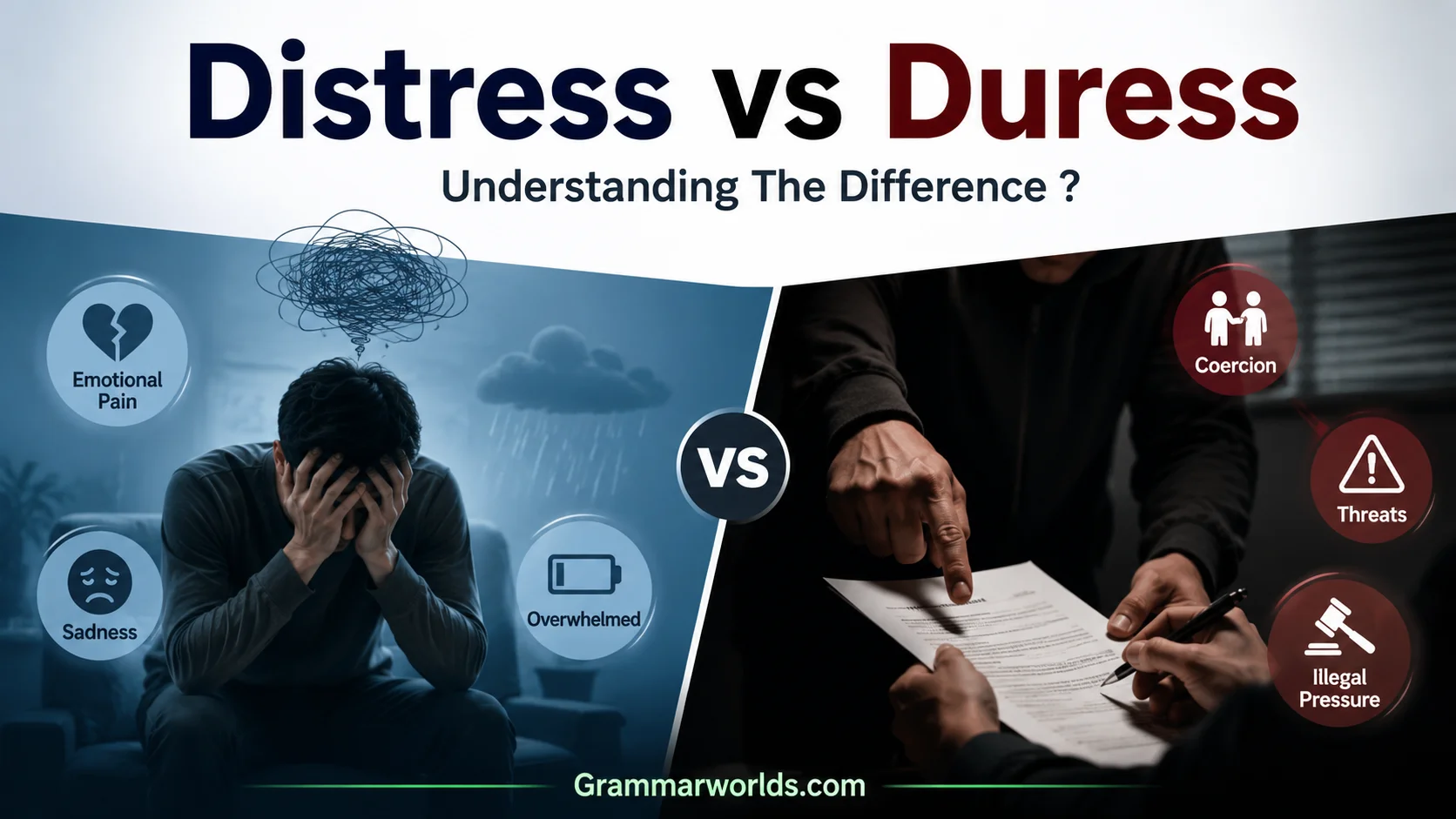
Distress vs Duress Understanding The Difference ? explains how distress and duress differ through legal and emotional contexts clearly with care. Many People become confused because Distress and Duress mean the same at first glance, as these words sound similar, but they represent distinct concepts with different meanings.
Distress refers to a state of severe suffering, anxiety, pain, and an emotional or physical response caused by difficult situations, circumstances, or stress. It is an internal response where a person may feel overwhelmed by serious consequences. In psychological contexts, it can influence mental health, physical well-being, emotional well-being, quality of life, and productivity.
Duress involves external pressure, coercion, threat, force, or compulsion where another party makes someone act against their will. In a legal context, Duress creates important legal implications because unlawful pressure, obligation, or influence may affect legal rights, consent, decision-making, contract validity, and agreement enforcement. This legal terminology is important when studying law, handling workplace disputes, or understanding criminal defenses and workplace issues.
What Is Distress? Definition and Meaning
Distress refers to a state of serious emotional, mental, or physical suffering. It happens when a person experiences a situation that feels overwhelming, painful, frightening, or difficult to manage.
Unlike duress, distress does not require another person to create the problem. A person can experience distress because of personal struggles, unexpected events, health problems, financial issues, or emotional challenges.
For example:
- A person may feel distress after losing a loved one.
- An employee may experience distress because of extreme workplace pressure.
- A family may experience distress after facing financial hardship.
The common factor is the person’s internal response to a difficult situation.
A simple way to remember it:
Distress describes what happens inside you when life becomes difficult.
Understanding the Meaning of Emotional Distress
When people use the word distress, they often refer to emotional distress.
Emotional distress describes intense negative emotions that interfere with a person’s normal thoughts, behaviors, or daily activities.
Common signs of emotional distress may include:
- Persistent sadness.
- Anxiety or constant worry.
- Feeling overwhelmed.
- Difficulty concentrating.
- Changes in sleep patterns.
- Loss of motivation.
- Feeling hopeless or emotionally exhausted.
However, experiencing distress does not always mean someone has a mental health condition. Temporary distress is a normal human reaction to challenging circumstances.
For example, feeling distressed before an important exam, job interview, or difficult conversation is common. The problem usually appears when distress becomes severe, long-lasting, or difficult to manage.
Common Causes of Distress
Distress can come from many areas of life. Some causes are sudden, while others build slowly over time.
Personal and Emotional Causes
Many people experience distress because of major life events.
Examples include:
- Losing someone close.
- Ending a relationship.
- Moving to a new place.
- Experiencing loneliness.
- Facing uncertainty about the future.
A major life change can create emotional pressure because people often need time to adjust.
Financial Distress
Money problems are one of the most common sources of distress.
Financial distress can happen because of:
- Job loss.
- Unexpected expenses.
- Debt.
- Rising living costs.
- Business challenges.
For example, someone who cannot pay their bills may experience constant worry and emotional strain. The problem is not only the financial situation itself but also the fear and uncertainty surrounding it.
Workplace Distress
A workplace can become a source of distress when pressure becomes overwhelming.
Common workplace causes include:
- Excessive workload.
- Unrealistic deadlines.
- Lack of support.
- Workplace conflict.
- Fear of losing employment.
A person dealing with workplace distress may feel exhausted, frustrated, or unable to disconnect from job-related worries.
Physical Distress
Distress can also describe physical suffering.
Examples include:
- Severe pain.
- Injury.
- Illness.
- Extreme fatigue.
- Physical discomfort.
Doctors and healthcare professionals sometimes use the term to describe a patient’s physical condition.
For example:
- “The patient showed signs of respiratory distress.”
In this context, distress refers to a serious physical struggle rather than an emotional reaction.
Types of Distress Explained
Distress appears in different forms depending on the situation.
Psychological Distress
Psychological distress affects a person’s thoughts and emotions.
Examples:
- Feeling constantly worried.
- Having difficulty managing emotions.
- Feeling mentally overwhelmed.
This type of distress often affects decision-making, relationships, and daily activities.
Emotional Distress
Emotional distress focuses on feelings.
A person experiencing emotional distress may feel:
- Sadness.
- Fear.
- Anger.
- Frustration.
- Emotional exhaustion.
For example, someone going through a difficult divorce may experience emotional distress because of grief, uncertainty, and major life changes.
Physical Distress
Physical distress occurs when the body struggles because of illness, injury, or extreme conditions.
Examples:
- Difficulty breathing.
- Severe pain.
- Physical exhaustion.
- Medical emergencies.
Healthcare workers often use this term because it helps describe a person’s physical condition clearly.
What Is Duress? Definition and Meaning
Duress means pressure, intimidation, threats, or force used to make someone take an action against their own wishes.
Unlike distress, which focuses on suffering, duress focuses on control.
The key question behind duress is:
“Did someone or something force this person into a decision they would not normally make?”
For example:
- Someone signs a contract because another person threatens them.
- A person gives away property because they fear harm.
- An employee agrees to something because of serious intimidation.
In these situations, the person’s choice may not be completely voluntary.
Also Read This: Attorneys vs Attorneys Which Spelling Is Correct?
Understanding the Meaning of Being Under Duress
The phrase “under duress” means someone acted because they faced extreme pressure, threats, or coercion.
Examples:
- “The witness claimed he gave the statement under duress.”
- “She argued that she signed the agreement under duress.”
Being under duress suggests that a person did not act freely.
However, ordinary stress or pressure does not automatically equal duress.
For example:
Not duress:
A student studies late because an exam is approaching.
Possible duress:
A student is threatened with harm unless they reveal answers to an exam.
The difference is the presence of coercion.
Duress in Legal Contexts
The word duress appears frequently in legal discussions because it relates to free will and consent.
Courts often examine whether a person made a genuine choice or acted because of unlawful pressure.
The exact legal definition varies depending on the country and legal system, but the basic idea remains the same:
A person should not be forced into important decisions through threats or improper pressure.
Duress in Contract Law
Contracts usually require voluntary agreement between parties.
If someone signs a contract because of threats, intimidation, or unlawful pressure, they may argue that the agreement happened under duress.
Example:
A business owner threatens another person with financial harm unless they sign an unfair agreement immediately.
The person signs because they fear serious consequences.
A court may examine:
- Was there a threat?
- Was the threat serious?
- Did it influence the person’s decision?
- Did the person have another reasonable option?
A stressful negotiation is not automatically duress.
For example:
- “Sign this contract today because the offer expires tomorrow.”
This may create pressure but usually does not qualify as legal duress.
Duress in Criminal Law
Duress can also appear in criminal cases.
A person may claim they committed an illegal act because another person threatened them with serious harm.
Example:
Someone threatens to hurt a person unless they help commit a crime.
The person may argue they acted under duress because they feared immediate danger.
However, legal systems usually consider several factors:
- The seriousness of the threat.
- Whether the threat was immediate.
- Whether the person could safely escape.
- Whether the response was reasonable under the circumstances.
Types of Duress
Duress can happen in several forms.
Physical Duress
Physical duress involves threats or actions connected to bodily harm.
Examples:
- Threatening violence.
- Using physical force.
- Threatening someone’s safety.
This is one of the clearest forms of coercion.
Psychological Duress
Psychological duress involves severe mental pressure.
Examples:
- Intimidation.
- Threats.
- Extreme manipulation.
- Fear-based control.
Psychological pressure can be harder to identify because it does not always involve physical violence.
Economic Duress
Economic duress involves unfair financial pressure.
Example:
A company threatens to destroy another business financially unless the owner accepts unreasonable terms.
The key issue is whether someone used financial power unfairly to remove another person’s ability to choose freely.
Duress of Circumstances
Sometimes extreme circumstances create pressure that affects someone’s choices.
This concept appears mostly in legal discussions.
For example:
A person may argue that an emergency situation left them with no reasonable alternative.
Courts usually examine these situations carefully because difficult circumstances alone do not always create legal duress.
Distress vs. Duress: Key Differences Explained
Although these words sound similar, their meanings are clearly different.
| Difference | Distress | Duress |
| Definition | A state of suffering or emotional pain | Pressure or force used to influence someone’s actions |
| Source | A difficult event, situation, or condition | Usually another person’s threats or coercion |
| Focus | Feelings and experiences | Control and forced decisions |
| Common fields | Psychology, healthcare, everyday speech | Law, contracts, criminal cases |
| Example | Feeling distressed after losing a job | Signing a document because of threats |
The easiest distinction:
Distress affects how you feel. Duress affects what you do.
Real-Life Case Studies: Distress vs. Duress Examples
Understanding examples makes the difference much easier.
Case Study: Workplace Pressure
Situation:
Maria works long hours because her company has a major project deadline.
Distress:
Maria feels exhausted, anxious, and overwhelmed because of the workload.
Duress:
Maria’s manager threatens to fire her unless she works unpaid extra hours against company policy.
Why the difference matters:
The first situation involves emotional strain. The second involves possible coercion.
Case Study: Financial Problems
Situation:
James loses his job and struggles to pay his bills.
Distress:
James experiences financial distress because of uncertainty and money problems.
Duress:
Someone threatens James and forces him to sign over his property.
Why the difference matters:
Financial hardship causes distress. Threats create duress.
Faqs:
What is the main difference between distress and duress?
The main difference between distress and duress is the source and effect of the situation.
Distress describes a person’s suffering. It usually involves emotional, mental, or physical pain caused by a difficult experience.
Duress describes pressure, threats, or force used to make someone act in a way they would not freely choose.
A simple way to remember the difference:
- Distress = suffering you experience.
- Duress = pressure used against you.
For example, feeling anxious after losing your job is distress. Signing an agreement because someone threatened you is duress.
Can someone experience distress and duress at the same time?
Yes, a person can experience both distress and duress at the same time.
For example, imagine someone is threatened into signing a contract. The threat creates duress because another person is forcing a decision. The fear, anxiety, and emotional suffering caused by that experience may create distress.
The two terms can overlap, but they describe different parts of the situation:
- Duress explains the external pressure.
- Distress explains the emotional impact.
Think of it like a storm. Duress is the strong wind pushing against you. Distress is how shaken and exhausted you feel afterward.
Is stress the same as distress?
No. Stress and distress are related, but they are not identical.
Stress is a general response to pressure or challenges. It can sometimes be positive because it motivates people to prepare, focus, or complete tasks.
Examples of normal stress:
- Preparing for an exam.
- Getting ready for a job interview.
- Meeting an important deadline.
Distress usually refers to harmful or overwhelming stress that negatively affects a person’s well-being.
Examples of distress:
- Constant anxiety caused by financial problems.
- Emotional suffering after a major loss.
- Feeling unable to cope with daily responsibilities.
Does every difficult situation count as duress?
No. A difficult situation does not automatically mean someone experienced duress.
Duress generally involves serious pressure, threats, intimidation, or coercion that removes a person’s ability to make a free choice.
Examples that may involve duress:
- Signing a document because someone threatens physical harm.
- Agreeing to something because of severe intimidation.
- Making a decision because someone uses unlawful pressure.
Examples that usually do not involve duress:
- Feeling pressured because of a deadline.
- Making a difficult choice at work.
- Negotiating a business agreement.
The key difference is whether someone was truly forced or whether they were simply facing a challenging decision.
What is an easy way to remember distress vs. duress?
A quick memory trick can help:
Distress = Difficulty inside.
Duress = Pressure from outside.
When you are deciding which word to use, ask yourself:
Conclusion
The difference between distress and duress comes down to one important idea: suffering versus forced action.
Distress describes the pain, anxiety, or difficulty someone experiences during a challenging situation. It can come from personal struggles, financial problems, health issues, workplace pressure, or major life changes.
Duress, however, involves pressure, threats, or coercion that influences someone’s decisions. It focuses on the loss of free choice and often appears in legal discussions involving contracts, agreements, and criminal cases.